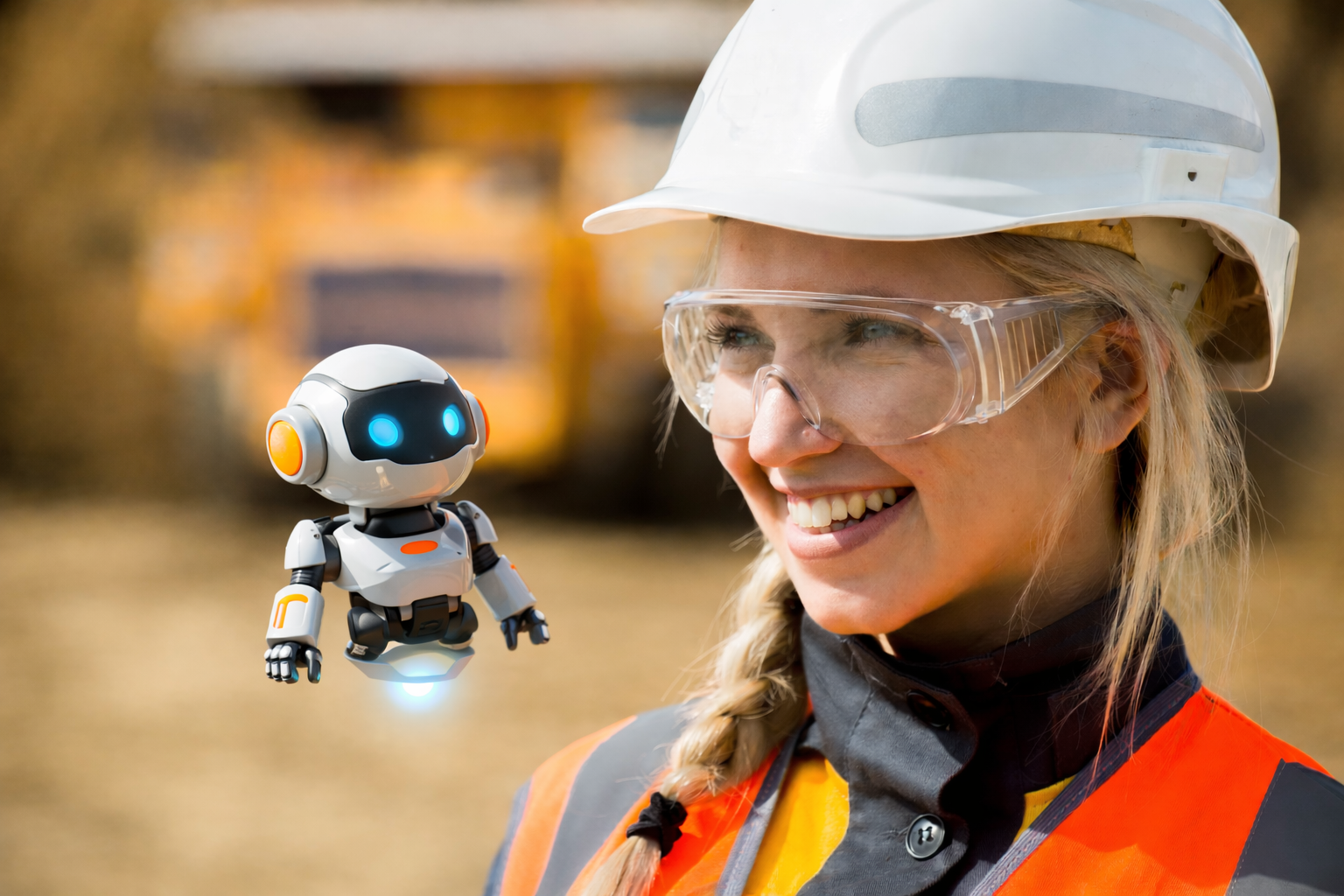
AI and the Construction Industry: Augmenting People, Not Replacing Them
The construction industry has always evolved through tools. From hand drawings to CAD, from manual surveying to laser scanning, progress has never been about replacing people—it has been about extending human capability.
Artificial intelligence is the next tool in that lineage.
Despite common fears, AI is not positioned to replace the skilled professionals who design, build, and manage our built environment. Instead, its real value lies in working alongside people—removing friction, reducing risk, and allowing human judgment to focus where it matters most.
Construction Is a Human Industry
Construction is fundamentally physical, contextual, and situational. Every site is different. Every building has constraints that rarely exist in textbooks. Weather changes. Materials arrive late. Trades overlap. Clients adjust scope mid-project.
These are not environments where automation thrives in isolation.
Human experience—judgment built from years of mistakes, intuition gained from seeing projects fail and succeed—is irreplaceable. AI does not replicate that. What it does exceptionally well is handle complexity at scale.
Where AI Adds Real Value
AI excels in three areas that consistently strain construction teams:
1. Information overload
Modern construction generates massive volumes of data: drawings, RFIs, schedules, reports, photos, change orders, and emails. AI can rapidly sort, cross-reference, and surface relevant information—allowing teams to make faster, more informed decisions without drowning in paperwork.
2. Risk identification
Patterns that lead to delays, cost overruns, or failures often repeat—but humans miss them under pressure. AI can flag anomalies, predict likely issues, and highlight areas of elevated risk before they become expensive problems. This doesn’t replace professional judgment; it sharpens it.
3. Administrative drag
Highly skilled people spend too much time on low-value tasks: formatting reports, summarizing meetings, compiling documentation. AI can automate much of this background work, freeing professionals to focus on planning, coordination, and execution.
The Role of People Becomes More Valuable, Not Less
As AI takes on repetitive and analytical tasks, the human role in construction shifts upward:
From data gathering to decision-making
From reactive problem-solving to proactive planning
From paperwork to leadership and coordination
Tradespeople, engineers, project managers, and executives become more effective—not obsolete.
Construction still requires trust, accountability, creativity, and ethical responsibility. AI does not carry liability. People do. And that reality keeps humans firmly at the center of the industry.
A Competitive Advantage for Forward-Thinking Firms
Companies that embrace AI thoughtfully will gain advantages in speed, clarity, and consistency. They will make fewer preventable mistakes. They will manage risk more effectively. They will deliver better outcomes with the same—or fewer—resources.
Those that resist will not be replaced by AI. They will be outperformed by people who use it.
Our Belief
We believe the future of construction is not human versus AI—it is human with AI.
AI is a tool. People remain the builders.
The firms that understand this balance will define the next era of the construction industry.